Roof Inspection Tips for Fall Rain Season
Do you need a roof replacement?
Fall rain in New England has a way of finding every weak spot in a roof. A curled shingle, a tired pipe boot, a clogged gutter, or a small flashing gap can turn into ceiling stains once steady rain arrives in New Hampshire, Massachusetts, and Maine.
The best time to look for roof trouble is before the weather shifts. Late summer and early fall give homeowners a useful window to spot damage, plan repairs, and decide whether a roof replacement makes more sense than another patch.
This guide walks through what to check, what warning signs matter most, and when to call a roofing professional before the fall rain season sets in.
Why fall roof inspections matter in New England
Homes in NH, MA, and ME deal with a tough mix of weather. Roofs take on summer heat, coastal moisture, wind-driven rain, falling leaves, ice, snow, and freeze-thaw cycles. By the time fall rain arrives, small problems may already be waiting.
Fall roof inspections help you catch issues before:
Rainwater reaches the attic
Shingles loosen during windstorms
Gutters overflow near the foundation
Ice dams form later in the season
Small leaks spread into insulation or drywall
A roof does not have to be old to need attention. Even newer roofs can develop problems around penetrations, flashing, vents, skylights, or valleys. These areas handle a lot of water, and they often fail before the main field of shingles.
For homeowners researching roofing or roof replacement NH, the key question is simple: can the roof still shed water reliably through fall and winter, or is it near the end of its service life?
Start with a safe ground-level inspection
You do not need to climb on the roof to learn a lot. In many cases, a careful walk around the home gives you enough information to decide whether to call a roofer.
Use binoculars if you have them. Look from several angles, including the street, driveway, backyard, and sides of the home. Check the roof when it is dry and visibility is good.
Look for these signs:
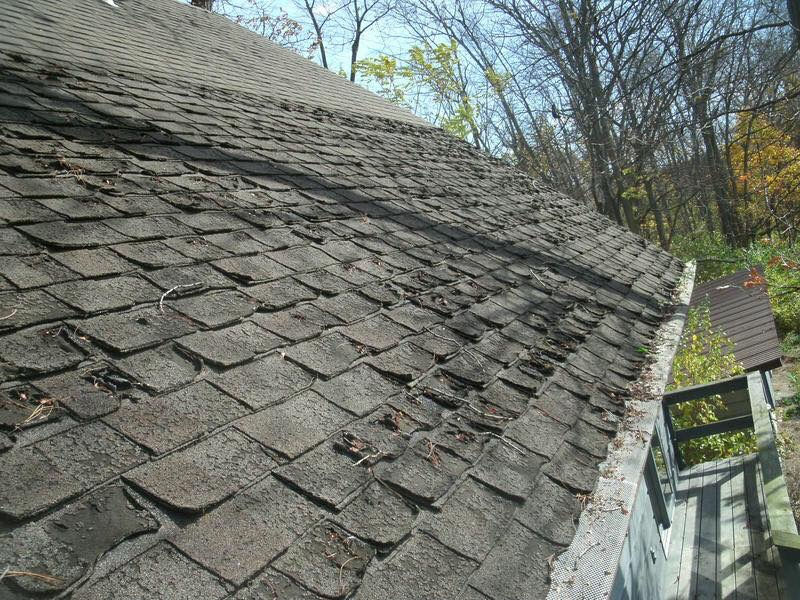
Shingles that are missing, cracked, curled, or lifted
Dark patches where granules are worn away
Uneven roof lines or sagging areas
Moss or algae growth
Exposed nail heads
Damaged ridge caps
Loose or missing flashing
Branches rubbing against the roof
Debris collecting in valleys
A few isolated defects may call for repair. Widespread damage is different. If many shingles show curling, cracking, or granule loss, the roof may be aging out.
If you can see several problem areas from the ground, there are often more that only show up during a closer inspection.
Do not walk on a steep, wet, or aging roof. Asphalt shingles can be slippery, and older shingles can crack under foot traffic. A professional roofer has the equipment and experience to inspect safely.
Check shingles for signs of wear
Asphalt shingles are common across New Hampshire, Massachusetts, and Maine because they hold up well in mixed weather and offer a practical balance of cost and performance. Still, they do not last forever.
Before fall rain, pay close attention to the surface of the shingles.
Curled or cupped shingles
Shingles should lie flat. If the edges curl up or the center cups inward, water can work under the shingle. Curling often points to age, heat exposure, poor attic ventilation, or past moisture issues.
A few curled shingles may be repairable. Many curled shingles across multiple roof planes can signal that replacement is near.
Cracked shingles
Cracks allow wind-driven rain to reach the layers below. In New England, freeze-thaw cycles can make cracks worse. Water gets in, freezes, expands, and opens the gap further.
Cracked shingles are especially concerning on south-facing roof slopes, where sun exposure is stronger.
Missing shingles
Missing shingles create a direct path for water. If you see bare spots or different-colored patches where shingles were replaced, take them seriously. Fall storms can lift surrounding shingles if the seal strips have weakened.
Granule loss
Granules protect shingles from the sun and weather. When they wear away, shingles age faster. Look for bald spots on the roof and piles of dark, sand-like granules in gutters or at downspout exits.
Some granule shedding is normal on a newer roof. Heavy granule loss on an older roof is a warning sign.

Inspect roof valleys, flashing, and penetrations
The most leak-prone parts of a roof are often not the wide open shingle areas. They are the joints, transitions, and openings where water changes direction.
Roof valleys
Valleys carry a lot of water during heavy rain. Leaves, pine needles, and small branches can collect there, especially on wooded lots in Maine and New Hampshire.
From the ground, look for:
Debris buildup
Rust stains on metal valleys
Missing shingles near the valley
Uneven or sunken areas
Moss growing where water lingers
A clogged valley can push water sideways under shingles. If your home sits under oak, maple, or pine trees, valleys deserve extra attention before fall rain.
Chimney flashing
Chimneys are a common source of leaks. Flashing should sit tight against both the roof and chimney. If it is loose, bent, rusted, or sealed with large amounts of caulk, it may need repair.
Heavy caulking around a chimney often points to past leak attempts. Caulk alone is rarely a long-term flashing fix.
Skylights
Skylights bring light into a home, but they need proper flashing. Check for staining inside around the skylight frame. On the outside, look for debris above the skylight and worn shingles nearby.
Pipe boots and vents
Rubber pipe boots can crack over time. Once that rubber splits, water can follow the pipe into the attic. Vents can also loosen or lose fasteners during high winds.
These small roof parts are easy to overlook, yet they can cause active leaks during fall storms.
Look at gutters and drainage
Your roof and gutters work together. Even a roof in decent condition can suffer if gutters overflow and force water back toward fascia, soffits, siding, or the foundation.
Before the fall rain season, check gutters for:
Leaves and pine needles
Sagging sections
Loose hangers
Seams that drip
Downspouts that are blocked
Water marks on fascia boards
Soil erosion below roof edges
During a light rain, watch how water moves. It should flow into gutters, through downspouts, and away from the house. If water pours over the gutter edge, the system is clogged, pitched wrong, or undersized for the roof area.
In New England, gutter problems can become winter problems. Standing water in gutters can freeze. Heavy ice can pull gutters loose and add stress to the roof edge.
Practical tip: Extend downspouts several feet away from the foundation where possible. Fall roof preparation should protect the whole home, not just the shingles.

Check inside the attic
Some roof problems show up inside before they are easy to spot outside. The attic can tell you whether water has already made it past the roof system.
Use a flashlight and look carefully. Stay on safe walking surfaces only. If the attic is unfinished, step only on framing, not insulation or drywall.
Look for:
Dark stains on roof decking
Damp insulation
Musty odors
Rust on nails
Light coming through roof boards
Mold-like staining
Water trails near vents or chimneys
Wet spots after rain
A small stain does not always mean an active leak. It may be old. The real question is whether it changes after rain. If you see fresh moisture, schedule a roof inspection quickly.
Attic ventilation also matters. Poor ventilation can trap warm, moist air under the roof deck. Over time, that can shorten shingle life and increase the risk of ice dams. In cold-weather regions like NH and ME, balanced intake and exhaust ventilation is especially important.
Know when a repair is enough
Not every roof problem means full replacement. A focused repair may make sense when the roof is generally healthy and the issue is limited.
Roof repair may be appropriate when:
Only a few shingles are missing
Flashing needs a targeted fix
A pipe boot is cracked
Damage is limited to one small area
The roof is not near the end of its expected life
There are no repeated leak patterns
A good repair should address the cause, not just the symptom. For example, replacing wet drywall without fixing the flashing will not solve the leak. Sealing a gap with caulk may stop water briefly, but proper flashing repair is often the better answer.
Ask any roofing contractor to explain what failed, how they will fix it, and whether nearby materials are still in good shape.
Know when roof replacement is the smarter choice
Sometimes repair only buys a little time. If the roof has broad wear, repeated leaks, or failing materials, replacement may protect the home better than another patch.
Signs that roof replacement may be the better option include:
Shingles are curling across large sections
Granule loss is widespread
The roof leaks in multiple places
Repairs have become frequent
Roof decking feels soft or shows water damage
Moss has caused shingle edges to lift
Storm damage affects more than one slope
The roof looks uneven or tired from the street
For many homeowners comparing repair and roof replacement NH options, the decision comes down to risk. If the roof is unlikely to make it through fall rain and winter snow without more damage, replacement may be the safer investment.
A new roof can also give contractors a chance to correct hidden issues, such as bad decking, poor ventilation, weak flashing details, or old underlayment.
Pay attention to regional roof risks in NH, MA, and ME
New England roofs face many of the same problems, but location still matters.
New Hampshire homes
NH homes often deal with snow load, heavy tree cover, wind, and freeze-thaw cycles. Roofs on wooded lots may collect leaves, branches, and moss. Mountain and lake-area homes can see fast-changing weather, so secure shingles and good flashing matter.
Massachusetts homes
MA homes vary widely, from inland neighborhoods to coastal properties. Coastal homes may face salt air, higher winds, and wind-driven rain. Older homes can also have layered roofing, aging flashing, or ventilation issues that need closer attention.
Maine homes
ME roofs often face long winters, wet fall weather, pine needles, moss, and ice. Homes near the coast may need extra attention to flashing and fasteners. Inland and rural properties may deal with overhanging trees and debris-heavy valleys.
Across all three states, the common theme is water management. Your roof must shed water fast, direct it into gutters, and keep it away from vulnerable seams.

Make a simple pre-rain roof checklist
Before fall rain becomes steady, use this checklist to organize your inspection.
Area to check | What to look for | Why it matters |
Shingles | Curling, cracking, missing tabs, bald spots | These signs can let water under the roof surface |
Valleys | Leaves, pine needles, worn shingles | Valleys carry heavy water flow |
Flashing | Gaps, rust, lifted metal, old caulk | Flashing protects roof transitions |
Gutters | Clogs, sagging, overflow | Poor drainage can damage fascia and foundations |
Attic | Stains, damp insulation, musty smells | Interior signs may reveal active leaks |
Roof edges | Rot, loose drip edge, ice damage | Edges take abuse from water and winter ice |
Vents and pipe boots | Cracked rubber, loose caps | Small penetrations can cause big leaks |
Take photos as you go. Photos help you compare changes over time and give a roofer useful context.
When to schedule a professional inspection
Call a roofing professional if you see active leaks, missing shingles, sagging areas, damaged flashing, or major granule loss. You should also schedule an inspection if your roof is older and you are unsure how much life it has left.
A professional inspection can identify:
Whether the roof needs repair or replacement
If the decking is sound
Whether ventilation is working
Where water is most likely entering
If storm damage may be involved
Whether maintenance can extend roof life
Try not to wait until the first major fall storm. Roofing schedules can fill up quickly as homeowners notice leaks. Earlier inspections give you more options and less pressure.
If you own a home in NH, MA, or ME and see signs of roof wear, schedule a local roof inspection before the fall rain season. Ask for a clear written assessment, photos of problem areas, and honest guidance on repair versus replacement.
The best time to act is before the leak
A roof inspection does not need to be complicated. Walk the property, look at the shingles, check gutters and valleys, inspect the attic, and pay close attention to flashing. These simple steps can help you catch roof problems before fall rain turns them into interior damage.
For homeowners in New Hampshire, Massachusetts, and Maine, preparation matters. A small repair now may prevent a stressful leak later. And if the roof is clearly near the end of its life, planning replacement before harsh weather arrives can protect the home through fall, winter, and beyond.
Start with what you can safely see from the ground. Then bring in a trusted roofing professional for anything that looks worn, loose, stained, or uncertain. The goal is simple: a dry home when the rain starts.


